
As told to The Growing Home by Grace L. and edited gently for length and clarity.
I remember the exact room where it hit me. It was a retirement dinner in downtown Chicago, in one of those private rooms with low lights, clinking glasses and the kind of polite laughter that floats over a table before it settles anywhere real. I had spent years leading meetings, guiding teams and calming people down when deadlines turned sharp. That night, I opened my mouth to answer a question about the future of the department and a younger man at the table spoke right over me. He was cheerful. He was confident. He did not even notice he had erased me in real time.
At first, I told myself it was a fluke. You do that when something hurts and you are trying to stay dignified. You keep your smile in place. You reach for your water glass. You decide to be generous. I did all of that. Then I went home to Oak Park, stood in my kitchen and felt a sadness I could not explain to my husband without sounding dramatic.
A few weeks later, it happened again at a Starbucks near the Lake Street station. I was waiting to order, wallet in hand and the barista looked past me to the man behind me, who was maybe 30 and wearing wireless earbuds and a Patagonia vest. I am sure she was busy. I am sure she was tired. I am also sure that being overlooked changes the temperature of your day.
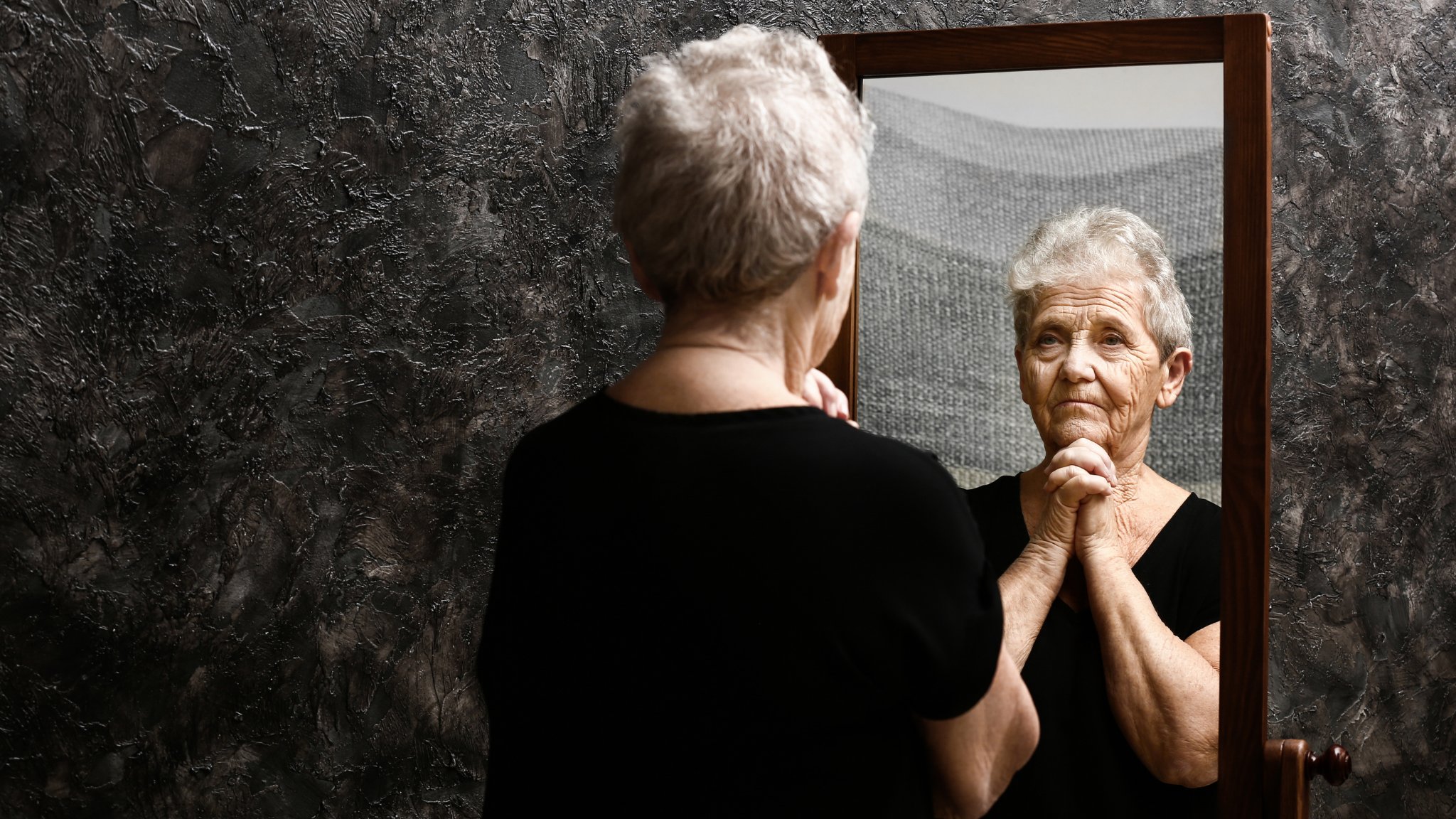
If you have lived long enough, you know there are pains that arrive with noise and there are pains that arrive quietly. This was the quiet kind. Nobody insults you directly. Nobody points and says your time has passed. You simply start to notice that your words land with less weight, your face blends into the wallpaper and your presence gets treated like background texture.
I will be honest, I missed my old self. I missed the version of me who walked into a conference room and felt the air shift. I missed the easy way I used to speak, before I began measuring whether anyone wanted to hear me. The grief of aging surprised me because my body was still strong enough for long walks along the lake, dinners with friends in Lincoln Square and hauling groceries home from Trader Joe’s. My grief lived somewhere less visible. It sat in my sense of place.
That was when I began reading. I wanted language for what I was feeling. I wanted something steadier than my own bruised guesses. I found psychology and for the first time, I felt less alone and more clear.
1. The first time I felt myself disappear
Years ago, I could command a room without trying very hard. I worked in nonprofit leadership, first in Milwaukee, then in Chicago and I knew how to move a tense conversation toward a decision. Sarah from accounting would give me a look across the table when the numbers were getting messy and I would jump in. My voice had authority because I had earned it and because I trusted it.
The first sharp change came in a meeting I attended as a consultant after retirement. A younger manager asked for ideas and I gave one. He nodded vaguely, turned to a man two seats down and invited him to expand on a point that was almost identical to mine. Everyone wrote down his version. I sat there with my legal pad and felt my chest tighten. I had become easy to miss.
If that has happened to you, you know the strange confusion of it. You wonder whether you were too soft-spoken, too slow, too old-fashioned, too something. Your mind becomes a courtroom. Every detail becomes evidence.
Later, I came across an Australian psychology feature on the invisible age, where Dr. Marlene Krasovitsky described older people being dismissed in workplaces, social spaces and healthcare settings. Dr. Zena Burgess put it plainly: “Feeling invisible may lead to feelings of isolation and loneliness.” That sentence felt painfully accurate. The piece also explained that repeated dismissal can be internalized, which can slowly push people to withdraw and feel less agency over their own lives.
I saw that withdrawal in myself before I had words for it. I stopped volunteering opinions as quickly. I let younger people fill the silence. At a neighborhood block party, I caught myself laughing too eagerly at someone else’s joke, as if I needed to prove I was still pleasant company. It took me a long time to realize that invisibility teaches you to shrink.
2. Why being ignored hurts so deeply
My friend David once told me, over coffee in Andersonville, that being ignored “shouldn’t be a big deal.” I knew what he meant. Nobody had slammed a door in my face. Nobody had taken away my pension. From the outside, these moments looked small. Inside the body, they felt much larger.
I found an answer in the work of psychologist Kipling D. Williams, who reviewed research on ostracism and social exclusion. He wrote, “Being ignored, excluded and/or rejected signals a threat.” That insight helped me understand why a skipped greeting, a passed-over comment, or a cashier looking through you can leave such a strong emotional mark. Even brief moments of exclusion can stir sadness and anger and shake your sense of belonging and self-esteem.
The thing is, your nervous system does not care whether the wound looks impressive from the outside. If you feel unseen, your body often responds before your pride can explain it away. My shoulders would tense. My voice would thin out. Some evenings I came home from perfectly ordinary errands feeling tired in a way sleep did not fix.
I remember standing in line at Whole Foods in the South Loop, watching the cashier chat brightly with the customer in front of me. When it was my turn, the exchange became clipped and mechanical. “Paper or plastic?” “Receipt?” “Next.” I walked out with my tote bag and felt silly for caring, then hurt for caring, then angry that I had turned the whole thing back on myself.
If you are in this season of life, I think it helps to say something simple and true. Being ignored hurts because humans are built for recognition. We want to feel that our presence registers. We want eye contact, response and basic social warmth. Those are small forms of nourishment. You miss them when they are gone.
Once I understood that, I stopped scolding myself for being sensitive. I began to see my reaction as information. My feelings were showing me where a basic human need had gone unmet.
3. The quiet language of everyday ageism
Ageism rarely arrived in my life as one dramatic scene. It came disguised as jokes, assumptions and tiny edits to my status. Someone would say I was “so cute” for using a new app. A doctor would direct part of the conversation to my husband, even though I was the one answering every question. A store clerk in Seattle called me “young lady” in a chirpy tone that made me feel less respected, not more.
There was a time when I laughed those moments off. Many women of my generation learned to smooth things over, keep the peace and avoid sounding difficult. You get very good at translating disrespect into something easier to swallow. You call it awkwardness. You call it generational difference. You call it nothing.
But the pattern mattered. Dr. Marlene Krasovitsky’s comments about older adults being treated as if their views are outdated or irrelevant gave me a frame I needed. I could suddenly see the repeated message underneath all those interactions. It said, gently and steadily, that my experience counted for less now. That message can settle into you before you have fully noticed it.
I saw it most clearly one afternoon in Austin when I visited my daughter. We were at a busy cafe and I asked a question about the menu. The young man behind the counter answered my daughter, not me. She turned right back toward me and said, “Mom, what do you want?” I loved her for that. She restored the line of respect in two seconds.
If you want to understand everyday ageism, pay attention to who gets assumed to be current, capable, attractive, or relevant. Pay attention to who gets interrupted, who gets patronized and whose preferences get rounded off at the edges. The language can sound harmless. The emotional effect can still be deep.
4. How I started to doubt my own relevance
I admit this part with some embarrassment. After enough of these moments, I began helping the world diminish me. I edited my clothes to look “less noticeable.” I kept my stories shorter. I second-guessed references that used to come naturally, as if mentioning an old campaign, a past election, or even a restaurant that closed years ago would mark me as expired.
My husband noticed before I did. We were getting ready for dinner in River North and I changed outfits three times. He finally asked, “What are you trying to hide?” I brushed him off, but his question stayed with me. I was trying to manage other people’s discomfort with my age before they even felt it.
That inner shift matters because beliefs can shape behavior and behavior can shape health. In a Yale School of Public Health piece featuring Becca Levy, Levy explained how positive and negative age beliefs influence the way we age. She said, “I feel like we’re reaching a critical moment, a tipping point.” Her research, described there, also found that older adults with positive age beliefs were 44% more likely to fully recover from severe disability. When I read that, I felt both sobered and hopeful. What I believed about aging was affecting how I lived inside it.
You can hear that and feel a little defensive. I did. I wanted to believe I was above cultural messages, above anti-aging noise, above the way media treats youth as the default setting for value. But boy, was I wrong. Those messages had gotten into my self-talk. They were there when I apologized for taking time. They were there when I assumed a younger person’s opinion would carry more force.
My doubt showed up in small domestic ways too. I hesitated before signing up for a digital photography class at the community center. I let my granddaughter update my phone without even trying first. At Target, I once handed a heavy bag to a clerk before he offered help. None of this was dramatic. It was simply the slow erosion of confidence.
Self-doubt in later life can look very tidy from the outside. You become agreeable, quiet and low-maintenance. People may even praise you for being easy. Inside, you feel yourself receding.
5. What psychology showed me about worth
Psychology gave me something I desperately needed, a wider lens. I had been treating my pain like a personal weakness. Research helped me see it as a human response to social conditions. That shift brought relief. It also brought responsibility, because once you can name a pattern, you can respond to it with more care.
One of the most healing ideas came from Stanford psychologist Laura Carstensen, who studies emotion and aging. She said, “Late adolescence and early adulthood are the worst years for emotional well-being.” She also explains that as people get older, they often experience better emotional balance and focus more on relationships and goals that feel emotionally meaningful. That matched my life more than the cultural script ever had. I was carrying grief, yes and I was also carrying patience, perspective and a clearer sense of what mattered.
I remember reading that in bed one rainy morning and laughing out loud. All those years I had assumed youth held the crown. Yet some of the calmest wisdom of my life arrived in my sixties. I no longer needed every room to admire me. I needed rooms that felt honest. I needed people who listened all the way through a sentence. Age had refined my values.
Becca Levy’s work deepened that lesson. If beliefs about aging can influence recovery, memory and the way people engage with life, then worth is more than a compliment we hope to receive from others. Worth also grows through the stories we repeat to ourselves. Positive age beliefs are not sugary affirmations. They are a way of protecting your place in your own life.
If you are moving through a season where the world feels less responsive, I hope you hear this clearly. Your value has never depended on how quickly strangers serve you, how often younger colleagues praise you, or how visible your face is in a crowded room. Your value lives in your history, your judgment, your humor, your memory, your care and the way you have learned to hold both joy and disappointment in the same pair of hands.
I still wanted more visibility after learning all this. I still wanted fairness. Psychology simply helped me stop confusing reduced social attention with reduced human worth. That distinction steadied me.
6. How I began taking up space again
The first change was small. I started speaking a little earlier in conversations, before self-doubt had time to make its case. If someone interrupted me, I would say, kindly and clearly, “I’d like to finish that thought.” The first few times, my heart pounded. Then it began to feel natural. Taking up space again is often a practice of tiny repetitions.
I also made my world more intentional. I joined a book group at the local library. I signed up for that photography class. I met a friend for long walks in Humboldt Park instead of waiting for people to call me. Dr. Burgess suggested that trying something new and joining community groups can reduce loneliness and rebuild togetherness and I found that to be true in the most ordinary, life-giving ways.
There was a Saturday in late spring when our class took pictures at the Garfield Park Conservatory. I crouched near a patch of ferns, trying to catch the light and a woman beside me asked how I got the angle. I showed her. We ended up talking for half an hour about cameras, grandkids and divorce. I left feeling vivid again. Visibility grows in places where curiosity is shared.
My daughter helped too. She began handing conversations back to me when people skipped over me in public. My grandson asked me to teach him how to roast a chicken because mine “tastes like real food.” That made me laugh and it also reminded me that relevance is relational. You do not need mass approval. You need genuine exchange.
If you are in your sixties or seventies, or heading there, I think this is worth remembering. You can answer invisibility with presence. You can dress in the color you love. You can ask the second question in the doctor’s office. You can start the group text. You can say the thing you were about to swallow. Confidence after 60 has a quieter texture than it did at 35 and I find it far more solid.
These days, I still notice the slights. I am 69, not numb. A waiter will still hand the wine list to a younger person. Someone will still speak to me too loudly, as if age has one volume setting. The difference is that I do not disappear with their perception. I know where I am. I know what I carry. And when I walk into a room now, I bring myself with me on purpose.