
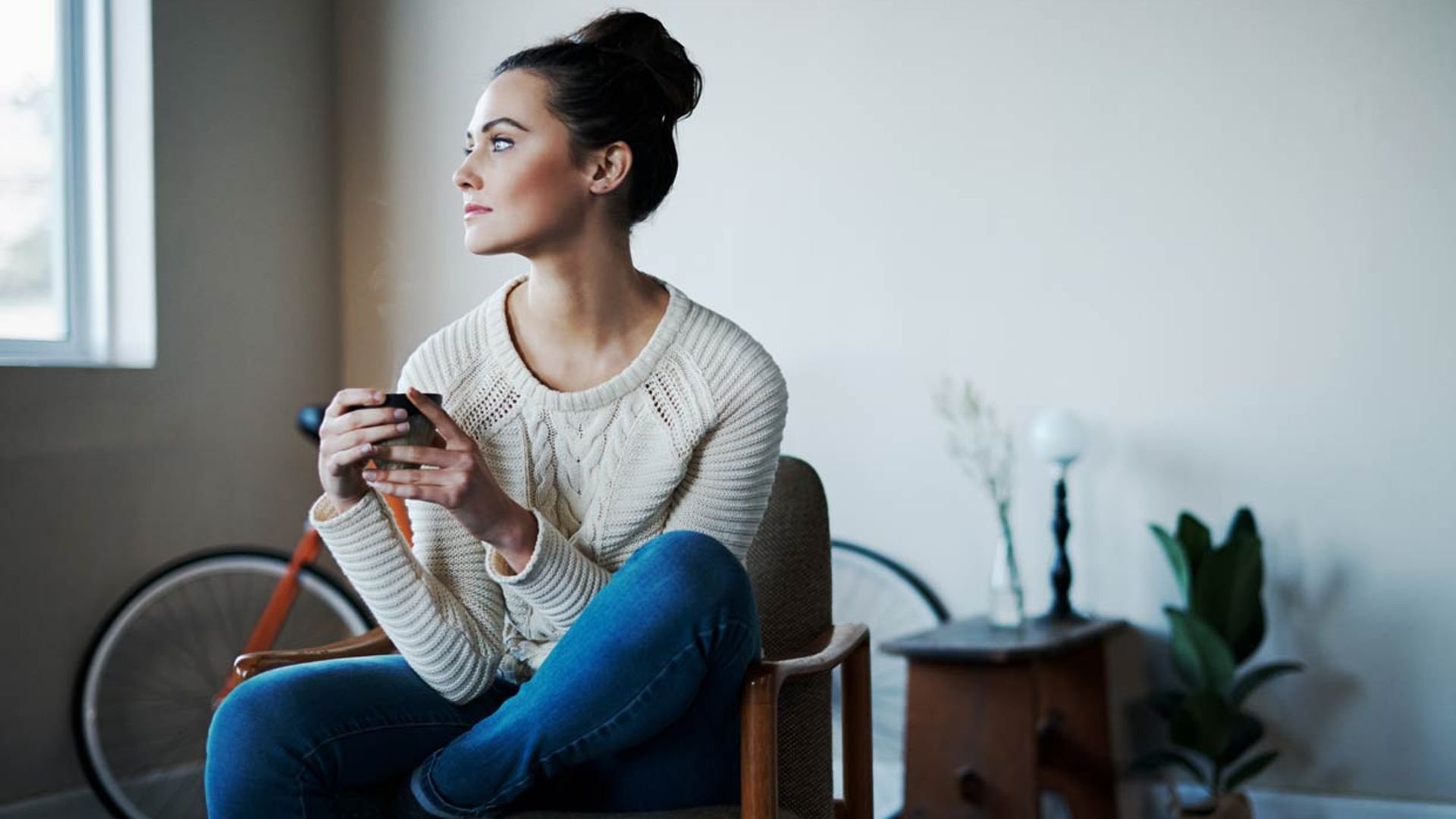
As told to The Growing Home by Dana R. and edited lightly for length and clarity.
I used to spend Saturday mornings in Chicago like I had perfected adult life. I would walk to Trader Joe’s, buy tulips I did not need, grab a latte from Starbucks on Clark and head home to my apartment in Lakeview with two canvas bags and a feeling I called peace. My phone stayed quiet most weekends. I told myself that meant I was independent, organized and good at being on my own.
I carried that story for eight years. I said it to coworkers. I said it to dates. I said it to my older cousin in Phoenix when she asked who I would call in an emergency. I said it with a little shrug, like a woman who had figured out something other people still struggled with. If you had met me then, you probably would have believed me.
I looked solid from the outside. I had a full-time job in communications, a clean kitchen, a gym routine and a calendar that never looked empty. I knew the names of the baristas at the Foxtrot near my office before it disappeared and I could make easy conversation with Sarah from accounting or the woman who sat next to me at yoga. I had people around me. I had very few people who knew me.
There is a big difference between being surrounded and being seen. You feel it when something great happens and you do not know who to text first. You feel it harder when something painful happens and your instinct is to keep moving, keep smiling, keep answering emails. I had built a life around safe distance and for a long time that distance looked polished.
It took me a long time to admit what was underneath. I did want close friends. I wanted the kind of friendship where you can say, “I had a hard day,” and hear someone answer, “Come over.” I wanted to stop performing strength every minute of the day. I wanted connection and some old part of me still believed connection came with a cost.
1. The version of me that looked independent
I remember when my friend David invited me to his birthday dinner in Logan Square and I almost said yes. Then I pictured myself at the table while everyone else slid into easy stories and inside jokes and I sent back my usual line, “Rain check, crazy week.” It was a Wednesday. My week was normal. I went home, made pasta and watched reruns like someone keeping a promise to solitude.
If you have ever been praised for being low-maintenance, you know how seductive that identity can be. You become the person who needs little, asks for little, reveals little. People admire your composure. They call you easygoing. Meanwhile, your inner life grows crowded with thoughts you never hand to anyone else. That kind of emotional self-protection can look very mature when you are young and very lonely when you are older.
Years ago, I moved from Seattle to Chicago for work and I treated the whole thing like a military operation. I found the apartment myself, assembled the IKEA dresser myself and carried half my kitchen up three flights because I did not want to ask my new coworkers for help. One of them, Priya, offered anyway. I thanked her and said I had it covered. At the time, self-sufficiency felt clean and strong.
The thing is, you can build an entire identity around competence. You answer messages quickly. You remember birthdays. You show up prepared. You become the one others lean on, which keeps attention away from the places where you feel thin-skinned or unsure. You may even convince yourself that close friendship is a bonus item, pleasant when available, unnecessary when absent.
That was the version of me people knew best. She was dependable. She was calm. She could handle her own life. She also kept every door cracked open just enough to leave quickly if a room started to feel too personal.
2. The childhood lesson I carried into every relationship
My childhood home in Mesa, Arizona, looked stable from the street. We had trimmed bushes, a beige garage door and a fridge covered in school photos. Inside, the emotional weather changed fast. My mother loved us deeply and stress hit her like a storm. My father went quiet when tension rose. I learned early that tears made adults uncomfortable and questions landed badly if the room was already tense.
So I became observant. I could read footsteps in the hallway. I could tell from the sound of a cabinet closing whether dinner would be calm. I got very good at staying pleasant, helpful and easy to manage. Children are brilliant at adaptation. You feel the temperature of the house and your body starts writing rules before you have words for them.
Later, I found language for what I had lived. In an APS summary, Dr. Robert Waldinger of Harvard Medical School said that “the influences of childhood experiences can be demonstrated even when people reach their 80s.” Coauthor Dr. Marc Schulz also pointed to the lasting role of warm early environments in shaping later relationship security. When I read that, I felt exposed in the strangest way. My adult habits suddenly had a history.
My friend once told me, “You act like every conversation has a hidden trapdoor.” She was joking, but she was right. I entered relationships with a quiet scanning system. Was this person safe today? Were they irritated? Had I shared too much? Did I say something embarrassing last week? I did not think of that as fear. I thought of it as being careful.
If home taught you that love could turn sharp without warning, your nervous system keeps that lesson longer than you expect. You can grow up, leave the house, pay your own rent and still feel a small internal jolt when intimacy asks something of you. That is how old rules survive. They travel light and they settle into everyday moments.
3. Why closeness kept feeling risky
There was a time when I believed my problem was simple chemistry. I told myself I had not met “my people” yet. I blamed adulthood, busy schedules, city life and everybody’s dependence on phones. Some of that was true. A lot of it helped me avoid the harder truth, which was this: vulnerability felt dangerous long before I ever tried building adult friendships.
One reason that feeling runs so deep is that the body reacts to disconnection as a threat. In this NIH interview on loneliness, Dr. Steve Cole explains, “When we fall out of that sense of connection and community, our bodies respond to that as if we were literally threatened.” You can hear that and suddenly understand why some people freeze, withdraw, or overthink after even a small social bruise. Your system is trying to protect you.
I saw that pattern in myself after ordinary moments. A friend would take a few hours to text back and I would feel my chest tighten. A coworker would cancel lunch and I would instantly decide I had misread the whole connection. Outwardly, I stayed cool. Inwardly, I had a rejection radar that picked up every signal and amplified it.
Researcher Anat Talmon of Stanford University put language to that bias in research on emotional maltreatment. She and her colleagues wrote that “negative feedback from others becomes more salient than positive feedback.” That line hit me hard. It described the exact math I had been using for years. One awkward moment counted more than ten warm ones.
If you relate to that, you know how exhausting it is. You can be invited, welcomed, included and still feel braced. You can hear affection and prepare for criticism. Closeness starts carrying two meanings at once, comfort and exposure and your body often responds to exposure first.
4. How I built a life that kept me protected
By my early thirties, I had turned self-protection into a lifestyle. I kept group friendships because groups allowed me to blend in. I preferred brunch over one-on-one dinners, birthdays over real conversations and text threads over phone calls. I could be funny in a room full of people. I became slippery when someone asked, “How are you really?”
I also curated my routine with almost comic precision. Monday, Pilates. Tuesday, late meeting. Wednesday, groceries. Thursday, dinner with work people. Friday, recovery night. Every slot had a purpose. A full calendar gave me a convincing reason to stay slightly unavailable, which meant no one could get close enough to disappoint me or see how hungry I was for closeness in the first place.
A recent 30-year study led by Keely A. Dugan followed 705 participants from infancy to about age 30 and found that the quality of childhood friendships predicted adult attachment patterns, including how people thought, felt and behaved in friendships and romantic relationships. Reading that gave me a strange mix of grief and relief. My adult social habits were not random quirks. They were part of a longer chain.
The protective life I built was effective in the short term. You may have built one too. It helps you avoid humiliation. It helps you dodge dependence. It keeps your image intact. It also keeps tenderness on the other side of the glass. Over time, the habits that guard your heart can also starve it.
I admit I felt proud of my distance for a while. I called it high standards. I called it being selective. I called it adulthood. Looking back, I see a woman who had become highly skilled at preventing surprise pain. I also see how much energy it took to maintain that safe, controlled version of connection.
5. What loneliness looked like behind competence
One winter in Chicago, I got the flu so hard I could barely stand long enough to heat soup. I still remember sitting on my apartment floor in socks, waiting for a grocery delivery from Instacart and realizing there was no one I felt comfortable calling. Several people would have helped me. My problem lived somewhere deeper. I had not built the muscle of reaching.
High-functioning loneliness can hide in plain sight. You go to work. You answer emails. You laugh at lunch. You post a birthday story for someone you genuinely like. Then you go home with a feeling that nobody has touched the real center of your life in weeks. You become very good at functioning around an ache.
I remember another moment, smaller and somehow sadder. I got a promotion and sat at a café near the Chicago River with a blueberry muffin, trying to decide who would care in a way that felt personal. I texted my brother. He sent back three clapping emojis. I stared at the screen and felt the emptiness of a milestone with no witness.
The body keeps score in ordinary ways. You sleep lightly. You overthink after social plans. You feel oddly flat after being “on” all day. You crave company and resent the effort it seems to require. For me, loneliness did not always arrive as tears. Sometimes it arrived as numbness, irritation and a constant urge to distract myself with podcasts, errands and noise.
My therapist asked me once, “Who knows what hurts you?” I gave a long answer about privacy, maturity and dealing with things internally. She waited me out. Then she asked again. That second silence told the truth. Very few people knew, because I had trained almost everybody to know only the polished version.
6. The small risks that made friendship possible
Change started with something tiny. My coworker Priya asked how I was doing one Monday after a rough weekend and instead of saying, “Good, just tired,” I said, “Honestly, I feel off today.” That was it. Twelve plain words. She looked at me gently and said, “Want to take a walk at lunch?” I almost cried from the simplicity of being met.
If you are trying to build deeper friendship as an adult, grand emotional speeches are rarely the first step. Small risks matter more. You answer honestly when someone asks. You suggest coffee instead of waiting to be invited. You let a text sit in the world without rereading it ten times. You practice staying present through the mild discomfort of being known.
Years ago, I would have hidden every messy part until I could present it as a finished lesson. Now I try to share life while it is still unfolding. I told David I had been lonely. I told Priya I struggle to ask for help. I told my neighbor Elena that I always assume I am bothering people. None of them recoiled. Each conversation loosened something in me.
There was also the practical side. I started saying yes more often. I joined two friends at Cafe Ba-Ba-Reeba! on a Thursday even though my apartment was clean and my sweatpants were calling me home. I invited one woman from my building to walk around Montrose Beach. I sent the first follow-up text. These acts sound ordinary and that is exactly why they are powerful. Healing often happens inside repeated ordinary moments.
My friend once told me that courage can be borrowed. I love that phrase, borrowed courage. Sometimes your own bravery feels small, so you lean on someone else’s warmth until your nervous system catches up. You learn, slowly, that one honest exchange does not end in punishment. One canceled plan does not erase care. One awkward pause does not mean rejection.
What helped most was learning to stay in the room after I had revealed something real. That was new for me. I was used to sharing one vulnerable sentence and then covering it with a joke, a story, or a quick subject change. Staying put felt intimate. It also felt like the doorway to the kind of friendship I had wanted all along.
7. How I’m learning to stay open now
I wish I could tell you there was one breakthrough dinner, one beautiful therapy sentence, one perfect friend who solved it all. My life changed through repetition instead. I kept answering honestly. I kept inviting people in small ways. I kept noticing when my old instincts urged me to disappear and I stayed visible a little longer.
These days, my life in Chicago looks different. I still love time alone. I still take solo walks by the lake and browse books at Women & Children First in Andersonville. The difference is that solitude feels chosen more often and staying open feels less like standing in traffic. I have people I can call when something good happens and people I trust when life turns sharp.
You may never become the most emotionally transparent person in every room. You do not need to. You can simply become more reachable. You can let someone bring soup. You can say, “I felt hurt by that.” You can ask, “Are you free to talk?” These are humble sentences. They build a very different life.
I still think about what Dr. Waldinger said, that childhood experiences can echo all the way into old age. I think about Dr. Steve Cole’s reminder that our bodies respond to disconnection like threat. I think about Anat Talmon’s insight on how some of us give negative cues more power than positive ones. Together, those ideas helped me stop judging myself and start reading my patterns with compassion.
For years, I said I was fine without close friends. Today, I say something truer. I learned early to protect myself by staying emotionally contained. Now I am learning another skill, one conversation at a time. If you see yourself in this story, I hope you hear this clearly, your history may explain your distance and your future can still hold deep, steady, ordinary love.