
As told to The Growing Home by Uma R.; edited lightly for flow, length and clarity.
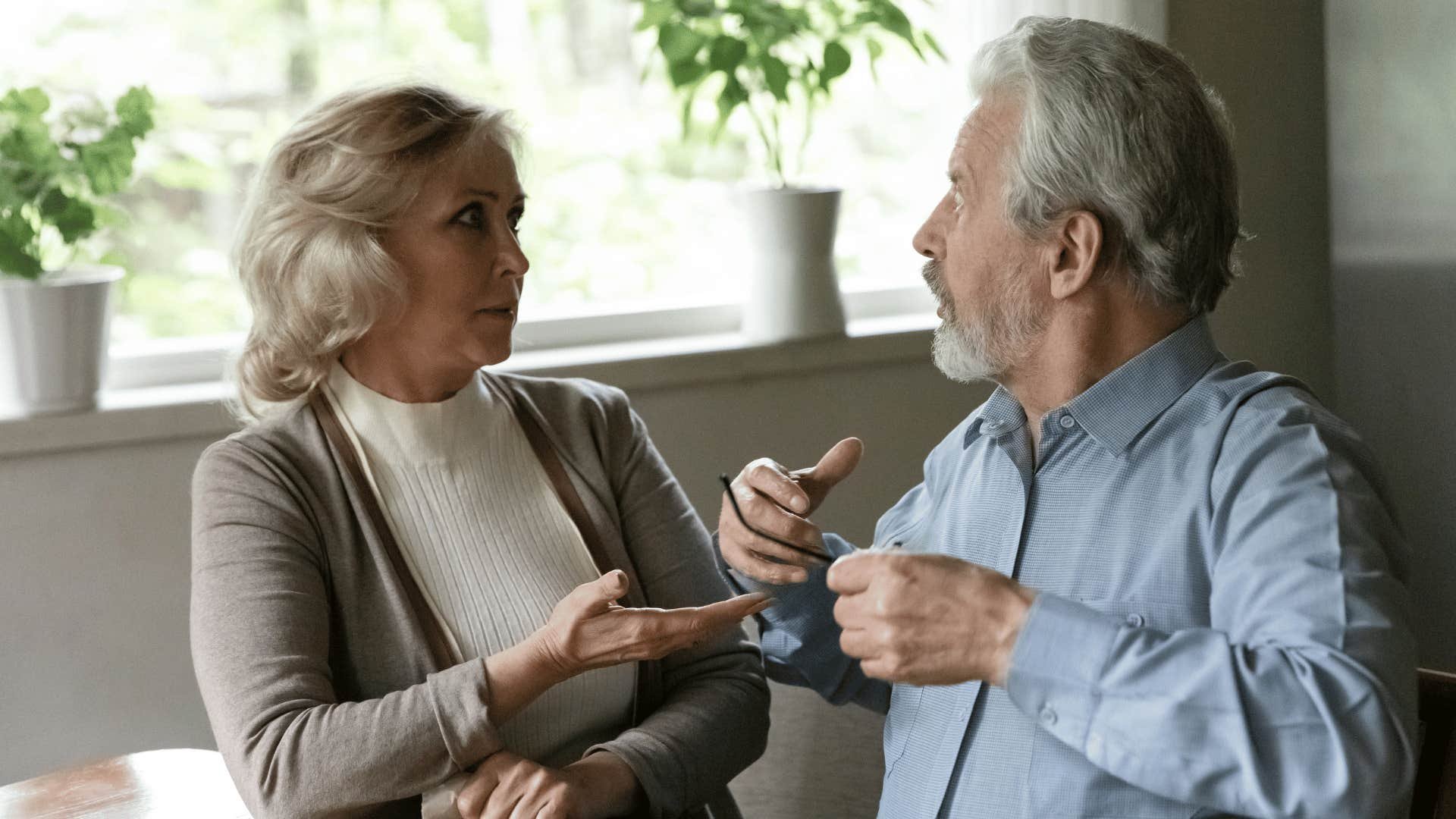
I remember the exact night because the kitchen light was too bright, the tea had gone lukewarm and my husband looked older than I had ever seen him. We were sitting in our little brick house in Evanston, just north of Chicago, the kind with a narrow hallway and a back porch that catches every bit of late summer heat. He had spent the evening moving papers from one pile to another, the way people do when they are trying to organize feelings that do not fit neatly into folders. Then he set the papers down and said, very quietly, “I think I’m scared.”
I asked him what he meant. I thought he was going to say money, or his blood pressure, or the stock market, or the roof we still had to fix before winter. Instead, he told me he did not know who he would be without work. He had spent more than forty years taking the Metra into downtown Chicago, carrying the same black lunch bag, greeting the same security guard and solving the kind of problems other people depended on him to solve. By then he was weeks from retirement and the closer it came, the more his confidence seemed to slip.
I will be honest, my first feeling was surprise. My husband had always been the steady one. He was the man who could figure out a broken dishwasher, a tax form and a family crisis before most people had found their reading glasses. I had pictured retirement as a soft landing. I saw morning walks by Lake Michigan, lunch dates, maybe a road trip to Madison or Saugatuck and fewer rushed dinners eaten with one eye on the clock.
But that night gave me a different picture. You can live beside someone for decades and still miss the invisible beams holding up their inner life. His job had given him a schedule, a role, a stream of daily proof that he mattered. When that structure started to fall away, he felt the floor shake under his feet. Many people do. A retirement date can look like freedom from the outside and feel like a cliff edge from the inside.
As I listened, I thought about my own changes over the years, the children leaving, my mother dying, the quiet after busy seasons. Every major shift had asked me the same question in a new voice: who are you when the role changes? That is why his fear landed differently than I expected. It felt honest. It felt human. It even felt, in a strange way, hopeful, because once the truth is spoken out loud, you finally have something real to work with.
So if you have ever watched your partner grow uneasy before a big life change, or if you have felt that unease in your own chest, I want to say this clearly. A shaken identity can become the beginning of a deeper life. I learned that in our seventies, over cold tea and a trembling confession and it changed the way I saw both my husband and our future.
1. The night he finally said it
That night started like a hundred ordinary nights. I had gone to Trader Joe’s for tomatoes, yogurt and those peanut butter cups we pretend to buy for guests. He was at the dining room table with a yellow legal pad, making lists about Medicare, pension dates and the garage shelves he planned to clean “once he had time.” There was a Cubs game humming from the living room. The whole scene looked calm. Underneath it, he was unraveling.
When he said he felt lost, I did what many long-married women do first. I tried to solve it too fast. I said he would golf more, sleep in, maybe volunteer somewhere. I mentioned our friends in Naperville who seemed delighted by retirement, the photos from Arizona, the cheerful lunches and museum trips. But boy, was I wrong. He did not need ideas yet. He needed room to admit that retirement had touched his identity.
There was a long silence after that. Then he told me he had spent months pretending to be excited because everybody around him treated retirement like a prize. A cake at work. A watch from his team. Happy emails from people in Seattle, Austin and Minneapolis who had already left and said he was going to “love every minute.” You hear that enough and you begin to think you have failed if you feel grief alongside relief.
I took his hand and felt how cold it was. That detail stayed with me. The body often knows before the mouth does. You can call it nerves, dread, sadness, or simple uncertainty, but the feeling is real. Big transitions stir up old questions about usefulness, belonging and worth. Those questions can rise even when the practical side of life is secure.
Years ago, when I left a long part-time job at our church office, I remember standing in the Target parking lot and crying because nobody needed me at 9 a.m. the next morning. The thing is, roles become habits of the soul. You wake up expecting a certain version of yourself to appear. When she does not, or when he does not, the day feels strange. That first shock can make anyone wonder if they are becoming less, when they are really standing at the edge of change.
By the end of that conversation, nothing had been fixed. I did not give a brilliant speech. He did not suddenly feel better. What changed was smaller and more important. We had named the problem. In a marriage, that matters. A named fear becomes something two people can face together.
2. What work had been giving him
It took me a long time to realize that my husband had been getting much more from work than a paycheck. He had been getting rhythm. He had been getting status. He had been getting daily human contact without having to ask for it. Every weekday morning, he had a place to go, people who expected him and a trail of problems that reminded him his skills still had value.
I used to think of his office as the place that stole him from me. It took birthdays, dinners, Saturdays and more than one anniversary phone call. After he opened up, I saw another side. His work as a civil engineer gave him a dependable sense of purpose. He could point to a project and say, “I helped make that happen.” A retaining wall, a transit plan, a public building, these things gave shape to his days and proof of his competence.
That is why I found the work of Stanford psychologists Anne Colby and William Damon so moving when I later read about purposeful aging. Damon defines purpose as “sustained commitment to something that is meaningful to the self and contributes to something larger, beyond the self.” When I read that line, I thought, yes, that is exactly what my husband had been afraid of losing. He was not clinging to busyness. He was grieving a meaningful role in the larger world.
You can see this in ordinary life if you watch closely. A teacher misses the classroom buzz. A nurse misses being the calm one in the room. A shop owner misses opening the door before sunrise and greeting the first customer. Work often gives people an identity that feels sturdy and socially recognized. That matters, especially for men of my husband’s generation, many of whom were taught to measure themselves by usefulness and endurance.
My friend David, who retired from a bank in downtown Chicago, told me over coffee at Peet’s that the hardest part was how quiet his phone became. He did not miss the meetings. He missed being consulted. He missed the tiny signals that said, you still count here. I think many people underestimate how nourishing those signals are until they disappear.
Once I understood this, I became gentler. You might think retirement anxiety comes from ingratitude or inflexibility. Often it comes from attachment to a life that made sense. And if you want to help someone through that passage, it helps to honor what work had truly been giving them. Respect opens doors that pep talks never can.
3. Why retirement can shake a person
There was a time when I imagined retirement as one clean emotional note, relief. Then I watched my husband live through it and I saw a whole chord instead. Relief, pride, sadness, uncertainty, freedom, loneliness and excitement can all sit at the same table. The human mind handles change in layers. One layer says, “At last.” Another says, “Who am I now?”
Research helped me put words around what I was seeing. In a retirement study published in Psychological Science, researchers Ayse Yemiscigil, Nattavudh Powdthavee and Ashley V. Whillans found that retirement showed a positive causal effect on sense of purpose, especially in the first four years and especially for people who had been unhappy at work. I loved that finding because it offers hope. It tells you that a shaky beginning can still lead somewhere good. It also reminds you that the transition itself can be intense.
I saw that intensity in little domestic scenes. My husband would stand in the kitchen at 10:30 a.m. and ask, almost irritated, “What do people do all day?” He had projects he could have started. He had books on the side table and tools in the basement. Yet he felt oddly untethered. A free day sounds generous until you are facing eight unmarked hours and no external map.
The National Institute on Aging also emphasizes habits that support brain and emotional health in later life, such as movement, social activity, meaningful engagement and staying connected. When I read their guidance on healthy aging, it clicked for me. Retirement does better with structure. It does better with human contact. It does better when life still asks something of you, even in small ways.
That truth can surprise people. You spend decades longing for open time, then discover that too much unshaped time can feel heavy. You finally get to stop rushing and then you miss the feeling of being needed by 9 a.m. Retirement shakes a person because it reaches into routine, identity, social life and future plans all at once. It is a psychological transition and it asks for emotional preparation as much as financial preparation.
I admit I became a student of this after those first few months. I started paying attention to what brightened him and what drained him. A day with no plan made him restless. A day with one clear task made him lighter. A walk to the lake, a hardware store run to Home Depot, a call with an old coworker, those things gave his day shape. They were small, yet they carried a surprising amount of healing.
4. The fear under his fear
One afternoon, maybe three months into retirement, we were driving back from Wilmette after visiting my sister. Traffic was slow and he suddenly said, “I’m worried I’ve already done the most important thing I’ll ever do.” That was the deeper fear. It was not really about calendars or pensions. It was about significance.
I felt that sentence in my chest. Many older adults carry some version of it, even if they never speak it aloud. You reach a certain age and the culture around you gets noisy in a particular way. It praises youth, speed, innovation, disruption. Meanwhile, your own life is asking for patience, reflection and slower forms of contribution. It can make a person wonder whether they are drifting out of relevance.
Washington University psychologist Dr. Patrick Hill put words to something I had sensed in our house. He said, “Older people with a sense of purpose tend to be doing better in their lives.” He also points out that purpose can make people less reactive when setbacks happen. That rang true for us. On days when my husband had a reason to get up and engage, he carried himself differently. He seemed steadier, more himself, more open to the ordinary frustrations of aging without feeling flattened by them.
My friend Sarah from accounting told me her father went through this after leaving a law firm in Boston. He kept saying he felt “smaller.” That word stayed with me too. Sometimes the fear under retirement is a fear of shrinking, of becoming peripheral in your own story. You still have wisdom, skill, memory, humor and care to offer. You simply need a new path for those qualities to travel.
I remember sitting with my husband on our back porch, hearing a train in the distance and a neighbor’s dog barking two yards over. I told him I did not need him to prove his worth to me and I knew that was only part of the answer. A partner’s love matters deeply. Still, self-worth in retirement grows stronger when it comes from lived action, from contribution, from feeling your life move outward toward other people.
That was the gift hidden inside his confession. Once he admitted his fear, we could stop pretending that leisure alone would satisfy him. He needed meaning. Many people do. You can rest and still hunger for significance. You can enjoy a slower pace and still want your days to add up to something you believe in.
5. The small ways purpose came back
I wish I could tell you we had one grand breakthrough. We did not. Purpose returned the way spring does in Chicago, unevenly, with one warm day, then another, then a patch of green you almost miss. It started when our neighbor asked if my husband could help redesign a crumbling garden wall behind her two-flat. Then our grandson needed help building a pinewood derby track. Then the church asked whether he could join a facilities committee for six months.
Each one was small. Together, they changed his face. He began keeping a notebook again. He started sketching ideas at the breakfast table. He returned from meetings with that old alertness in his voice, the one I had heard for decades when he talked about solving a hard problem. He was not chasing his old identity. He was building a new one with familiar tools.
Another idea that mattered came from a study on social identities by Niklas K. Steffens, Jolanda Jetten, Catherine Haslam, Tegan Cruwys and S. Alexander Haslam. Their work found that retirees with multiple meaningful group memberships tended to have better health and retirement satisfaction, partly because those groups gave them chances to support other people. That insight felt wonderfully practical. Belonging protects well-being and giving support matters just as much as receiving it.
Once I understood that, I encouraged breadth instead of perfection. I stopped waiting for him to find one giant post-retirement mission. He joined a community garden near the lake. He started meeting two former coworkers for coffee at a Starbucks in Skokie once a month. He helped a widower on our block fix a sagging gate. Each group, each task, each small thread gave him another place to belong.
Years ago, I would have overlooked these things because they did not look grand enough. Now I see them as the architecture of a good later life. A purpose-filled day might include pruning tomatoes, calling a friend, balancing the checkbook and helping someone choose paint at Home Depot. Meaning grows through repetition. It grows through service. It grows through enough small acts that a person begins to feel useful again in their bones.
I changed too. I stopped hovering. I let him have his own rediscovery. When you love someone, you can be tempted to over-manage their healing. I had to learn the dignity of stepping back and letting him reclaim himself one ordinary act at a time.
6. How we stopped making retirement perform
I remember when I finally got tired of our own expectations. Retirement had quietly become a performance in our house. We thought it was supposed to look like travel photos, restaurant reservations and a constant state of gratitude. We had absorbed an image from magazines, Facebook posts and cheerful friends in sun hats. It was glossy, active and strangely exhausting.
So we made a simple shift. We stopped asking whether we were doing retirement “right.” We started asking whether a day felt honest. Did we move our bodies? Did we talk? Did we do one useful thing? Did we enjoy one ordinary pleasure, even if that pleasure was soup from a neighborhood diner and a walk past the frozen beach? That framework brought peace faster than any bucket list.
There is a quiet pressure on older adults to prove they are thriving in visible ways. Travel more. Reinvent more. Stay endlessly interesting. I think that pressure misses the emotional truth of later life. A good retirement often has modest days. It has doctor appointments, errands, boredom, tenderness, grief and joy sitting close together. A meaningful retirement includes space to be human.
My husband and I began protecting simple rituals. Friday lunch at a family-owned Mexican place in Rogers Park. Sunday phone calls with our daughter in Denver. A walk through the farmers market when weather allowed. We even kept a shared list on the refrigerator titled “small good things.” Fresh peaches. A card from an old friend. One strong rose blooming near the fence. These rituals gave our days a grounded kind of richness.
The thing is, once we stopped trying to make retirement impressive, it became more intimate. We laughed more. We argued less. He no longer felt judged by some imaginary scoreboard. I no longer felt responsible for manufacturing delight. We could meet the season as it was, instead of forcing it into a polished shape.
7. The life we began to build together
My husband has been retired long enough now that the first panic feels far away, though I still honor it because it opened the door to everything that followed. These days he wakes up with more ease. He still likes a plan and I smile when I see him writing one. Tuesday, fix the porch step. Wednesday, meet David for coffee. Thursday, help our granddaughter with her science fair board over FaceTime. The bones of purpose are there and they hold him well.
I have changed just as much. I used to think partnership in older age meant protecting each other from hard feelings. Now I think it means telling the truth sooner. It means saying, “I feel lost,” before the loneliness hardens. It means admitting when the next chapter scares you, even if everyone else expects you to call it freedom. Honest conversation in marriage can change the direction of a life.
Last fall we took the train into Chicago and walked through Millennium Park, then had soup near Michigan Avenue while tourists rushed past us. He looked around and said he felt present in a way he never could when he was working. That sentence mattered to me. His life had not become smaller. It had become wider. The urgency was lower. The noticing was deeper. Purpose after retirement had grown from pressure into presence.
My friend once told me that every marriage gets several lifetimes inside one relationship. I believe that now. We had our young-struggling years, our child-raising years, our caregiving years and our overworked middle years. This chapter asks for something gentler and more deliberate. We build it through errands, porch talks, shared worries, casseroles for sick neighbors and the occasional drive up the North Shore just to look at the water.
If you are standing near retirement, or standing beside someone who is, I want you to know that fear does not mean failure. It can mean your life is asking deeper questions. It can mean you care about living with heart. It can mean the old role no longer fits and a new one is waiting to be made through service, connection and attention. Identity can evolve at any age.
I am 75 now and I no longer see my husband’s confession as a dark moment. I see it as the night our next life began. He told me he was afraid of losing himself and in time he found a fuller version of that self, one less tied to a title and more rooted in character. We still have ordinary days. We still worry. We still leave dishes in the sink. Yet the life we began to build together has depth, usefulness and love in it. For me, that feels like a gift.