
This as-told-to essay was submitted by Ava R. to The Growing Home and edited for length and clarity.
I remember one Saturday in Chicago when I stood in the Trader Joe’s checkout line with a basket full of things for one, soup, raspberries, a tiny basil plant and a frozen pizza I planned to eat in my apartment in Logan Square. Everyone around me seemed paired off or grouped up. I felt exposed in a way I still have trouble explaining. My cart looked like evidence. My evening looked like evidence. I had started telling myself that doing things alone meant something had gone wrong in my life.
At the time, I filled every empty space I could find. I said yes to after-work drinks in River North, even when I was tired. I called people during short walks to the pharmacy. I kept podcasts running while I folded laundry, washed dishes and brushed my teeth. Silence made me uneasy because it brought me back to myself and I had spent a long time avoiding that reunion.
Then life did what life does. A relationship ended. Two close friends moved, one to Seattle and one to Austin. My office went hybrid, which meant fewer casual lunches and less background chatter from Sarah in accounting and Malik from sales. My calendar thinned out so fast that I could hear the echo. I had a choice, even if I did not see it clearly then. I could keep chasing noise, or I could learn how to stay with my own company.
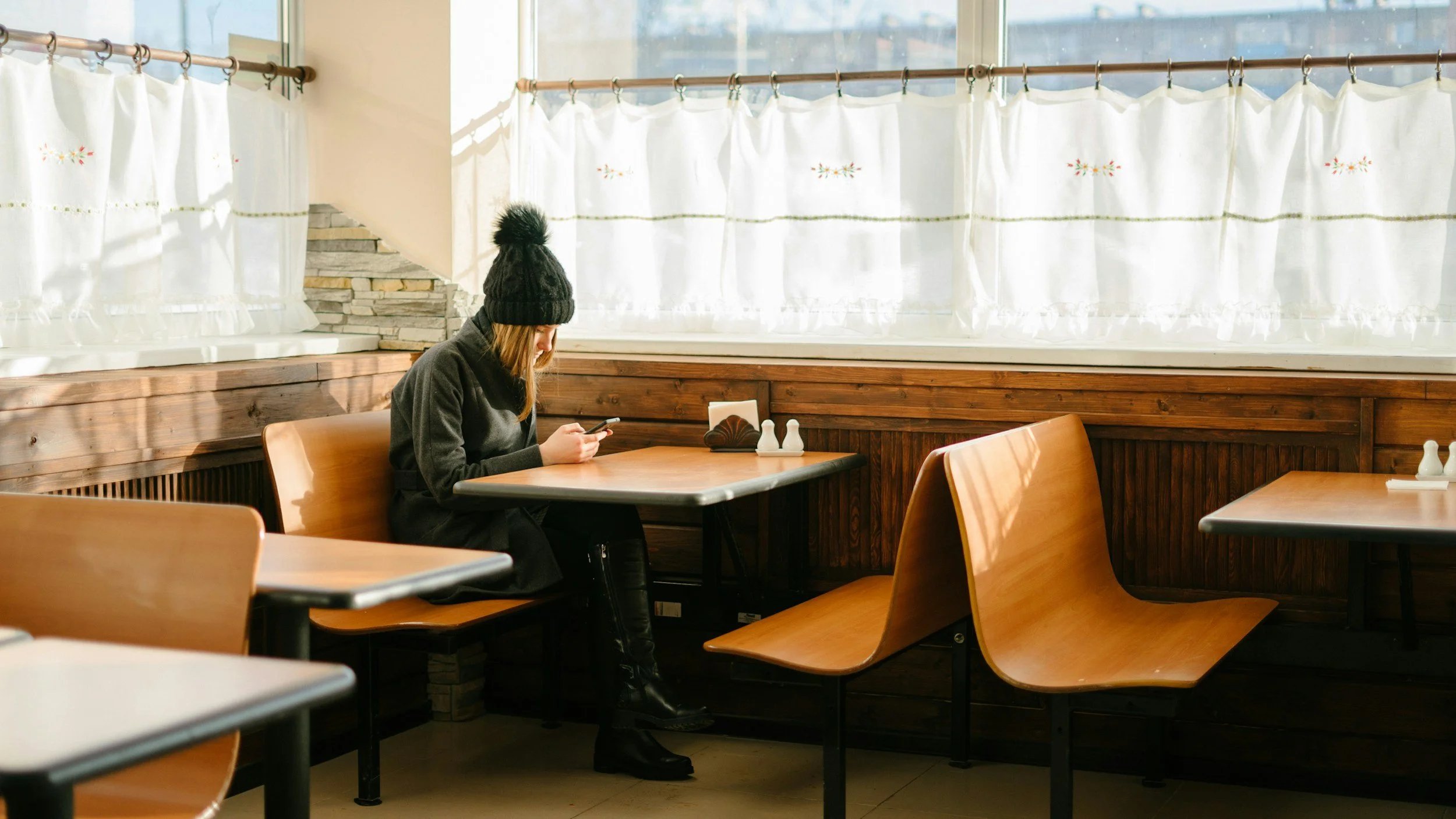
I started small. I took myself to La Colombe with a paperback and sat by the window for twenty minutes. I walked around my neighborhood without texting anyone. I bought one movie ticket at the Landmark Century Centre and kept waiting for the shame to hit. Instead, I felt a strange little lift in my chest. It felt like quiet self-trust and once I noticed it, I wanted more of it.
The thing is, loving time alone did not arrive all at once. It came in layers, through awkward afternoons, peaceful mornings and a hundred tiny decisions that taught me I could comfort myself, hear myself and steady myself. If you are in that same place, where your own company still feels a little unfamiliar, I want to tell you what changed for me.
1. I stopped treating solitude like a red flag
Years ago, I used to read my own solitude like a bad omen. If I spent Friday night by myself, I assumed I had become forgettable. If I went to brunch alone, I wondered who might see me and pity me. I had absorbed a very loud cultural message, the kind you pick up from social media, group chats and glossy city life. Constant company looked like proof that you were loved.
Once I slowed down, I saw how flimsy that belief was. A packed schedule can come from habit, fear, or simple momentum. Solitude can come from choice, rest, curiosity and self-respect. When you stop assigning panic to every empty hour, you begin to notice that being by yourself can hold warmth, creativity and relief. That shift sounds small. It changes a lot.
I remember taking myself to brunch at Lula Cafe and feeling my shoulders climb halfway to my ears as soon as the host said, “Table for one?” I almost pulled out my phone to make it look like someone was coming. Then I caught myself. I ordered coffee, eggs and toast. I watched families, couples and other solo diners move through the room and within ten minutes I felt almost normal, then genuinely good.
Later, I found a reading piece on Dr. Netta Weinstein’s work and one line stayed with me: “In solitude, we can feel empowered to think, feel and do what we want.” That word, empowered, mattered to me. I had been looking at my time alone through the lens of lack. I started seeing it as personal freedom instead.
When you stop treating your own company like a warning, you carry yourself differently. You make plans because they interest you. You stay home because rest sounds good. You become less performative in your own life. I think that was the first real step for me and maybe it can be one for you too.
2. I learned that being alone and feeling lonely are different
There was a time when I felt lonelier at a birthday dinner in Austin than I did in my apartment on a quiet Tuesday. I smiled through the meal, passed the guacamole, laughed at stories and still felt far away from everyone at the table. The ride back to my hotel was the hardest part. I had spent three hours with people and still felt unseen.
That experience helped me separate two feelings I had been blending together. Being alone describes a circumstance. Loneliness describes a painful sense of disconnection. They can overlap, of course. They also live separate lives. You can be by yourself and deeply at ease. You can be in a crowded room and feel like your inner world has no bridge to anybody else.
I came across an APS report about research led by Elisa C. Baek at the University of Southern California and her words gave shape to something I had felt for years. She said that “seeing the world differently than those around you may be a risk factor for loneliness, even if you regularly socialize with them.” That landed hard for me because it explained why connection is about resonance, not headcount.
I think about that every time someone says, “Just get out more,” as if more contact automatically creates closeness. Sometimes it does. Sometimes what your heart needs is shared understanding, emotional safety and a little room to be honest. When those things are missing, company can feel thin. When they are present, even a short conversation can nourish you.
Once I understood that difference, I stopped trying to fix every lonely feeling by adding more people. I started asking a better question. Do I need presence, or do I need understanding? That question made my choices wiser, softer and much more kind to myself.
3. My body got quieter
I did not realize how revved up I was until I spent time alone on purpose. My nervous system ran like a cafe espresso machine, hot, loud and always one button away from another shot. I checked my phone in line at Walgreens. I answered texts while crossing intersections. Even my fun had an edge to it. Everything felt urgent.
Then I read a PubMed study by Dr. Thuy-Vy T. Nguyen, Dr. Richard M. Ryan and Dr. Edward L. Deci. In the abstract, the researchers wrote that “solitude generally has a deactivation effect” on people’s feelings, lowering both positive and negative high-arousal emotions. I loved how plain that was. My body did not need another performance. It needed room to come down.
I started testing this in ordinary ways. I would sit on a bench in Lincoln Park for fifteen minutes before heading home. No scrolling. No music. Just the wind, the passing bikes and whatever I happened to notice. At first, I felt restless. Then my heartbeat seemed to settle into a slower, steadier rhythm. I left those little pauses feeling more like myself.
The research also found that solitude could bring relaxation and reduced stress when people actively chose to be alone. That detail matters. Choice changes the emotional texture of solitude. When you claim your time alone, even in short stretches, your body often receives it as safety.
I still enjoy busy nights and loud dinners and music that makes the floor shake. I also know the power of a quiet walk home, a lamp turned on in a dark room and ten minutes where nobody needs anything from me. Emotional calm became one of the first rewards that made solitude feel worth practicing.
4. I heard my own thoughts again
For a long stretch, my thoughts were crowded out by everybody else’s voice. Group chats told me where to eat. TikTok told me what kind of life looked desirable. Friends told me what counted as a good weekend. I moved through my days reacting more than reflecting. You can live like that for years and barely notice.
It took me a long time to realize that silence helps you hear your own inner language. That is where preference lives. That is where grief speaks up. That is where the small, true desires show themselves, the ones that get buried under noise and speed. When you spend a little time by yourself, you begin to hear which parts of your life feel aligned and which parts feel borrowed.
I found another piece of research that gave this shape. In a 2022 study on solitude research, Dr. Thuy-Vy T. Nguyen, Dr. Netta Weinstein and Dr. Richard M. Ryan found that introversion did not predict who enjoyed solitude in a healthy way. What mattered more was dispositional autonomy, the tendency to act from self-congruence, interest and low pressure. In plain English, the people who benefited most were moving from an inner yes.
I felt that truth one Sunday morning with a notebook open on my kitchen table. I had lit a candle from Target, made coffee and written one question at the top of the page: What do I actually want more of this year? The answers were embarrassingly simple. More sleep. Fewer obligatory dinners. More writing. More walks near the lake. Less pretending. I do not think I would have heard those answers in a crowded room.
That is one of the quiet gifts of time alone. You hear your preferences before they harden into resentment. You notice your limits before burnout speaks for them. You begin to trust your own signals. For me, that was the beginning of inner clarity.
5. I stopped chasing company out of panic
I admit this one took me the longest. When I felt rejected, bored, anxious, or raw, my first instinct was to reach outward fast. I texted three people at once. I opened Instagram. I checked whether anyone wanted to “do something” even if I had no idea what that something was. My urge had very little to do with connection. It had everything to do with escape.
Once I noticed that pattern, I felt both humbled and relieved. Panic has a way of dressing itself up as social energy. It says yes to plans you do not want. It keeps you in conversations long after your spirit has left the room. It convinces you that relief always lives in somebody else’s reply.
My friend David saw this before I did. We were at a bar in Wicker Park, the kind with dim bulbs and overpriced fries and I kept checking my phone between sentences. He finally laughed and said, “You know you’re allowed to go home, right?” I laughed too, then almost cried in the Lyft because he was right. I had been treating my own apartment like a place to avoid.
The research from Dr. Nguyen, Dr. Ryan and Dr. Deci helped me here too. If solitude can lower high-arousal emotional states, then a pause before reaching out can help you respond instead of react. That does not mean you should isolate when you need support. It means you can give yourself a moment to find your footing before you ask someone else to hold you up.
So I made a rule. When I felt the panic-texting urge, I waited twenty minutes. I made tea. I folded laundry. I walked one block and came back. Half the time, I still texted someone. The other half, the wave passed and I realized I wanted comfort, not contact. That distinction changed the whole evening.
If you have ever scrambled for company because being with yourself felt too intense, I get it. I really do. But there is something powerful about learning that you can survive the first surge. Self-soothing is slow magic. It gives your relationships more honesty because you stop using people as emergency exits.
6. I built small rituals that held me together
My life changed through rituals so small they almost looked silly from the outside. Saturday morning coffee in the blue mug. Fresh sheets on Sunday afternoon. A walk to the farmers market in summer. Soup on the stove in winter. A ten-minute reset before bed where I put my phone on the dresser and turned on one lamp in the living room. These little acts gave shape to hours that used to feel empty.
When you spend time alone, rituals matter because they create continuity. They turn solitude into something lived, not just endured. They help your body learn what safety feels like in ordinary moments. Structure can hold you while your emotions settle. Familiarity can soften the sharp edges of a hard week.
I remember one rainy evening when I came home from a draining day and felt that old ache to be rescued by somebody else’s attention. Instead, I walked to Aldi, bought tomatoes, basil and sourdough and made myself grilled cheese and soup. I played Nina Simone on a little speaker and stood in my socks by the stove. Nothing dramatic happened. I simply felt cared for and for once the care came from me.
Over time, these routines built emotional self-sufficiency. I do not mean the hardened kind where you refuse help and call it strength. I mean the grounded kind where you know how to return yourself to center. A candle, a walk, a meal, a page in a journal, a shower taken slowly, these became ways of saying, “I’m here with you.”
My favorite ritual still happens at dusk. I put my phone in another room, water the plants and straighten one small area of the apartment, usually the coffee table or kitchen counter. It takes seven minutes. It tells my brain the day is shifting. It tells my heart that home is a place I help create.
7. I became more careful with whose energy I kept
Once I learned how peaceful my own company could feel, my tolerance for chaos changed. I still love lively people. I still enjoy a noisy patio in summer and a long catch-up over tacos. I also started noticing the difference between energized and depleted. That difference became impossible to ignore.
Years ago, I would leave certain dinners feeling tight in the chest and fuzzy in the head, then blame myself for being too sensitive. Solitude gave me a baseline. When your inner life gets quieter, you can tell when someone’s energy pulls you away from yourself. You become more alert to gossip, constant criticism, performative intimacy and people who make every room feel slightly unsafe.
I had this realization after happy hour with a few coworkers in the Loop. One person spent the whole evening dissecting everybody else’s business, who got promoted, who looked tired, whose marriage was “probably weird.” I came home feeling grimy, like I had walked through emotional secondhand smoke. I made tea, sat on the couch and thought, I do not want this in my nervous system anymore.
That moment made me more selective. I started saying yes to people who left me feeling spacious and less often to people who left me braced. Healthy boundaries became easier once I understood the value of my own peace. You guard what you finally learn to cherish.
My social life actually got better after that. Smaller, yes. Warmer too. I stopped collecting interactions and started choosing connection with more care. There is a lot of freedom in realizing that your life does not need constant access to everyone.
8. I brought calmer energy back to my relationships
This surprised me most. I had assumed that spending more time alone would make me less connected to the people I loved. The opposite happened. I arrived more grounded. I listened better. I asked for less mind reading. I stopped entering every conversation with that subtle hunger for reassurance.
When you learn to regulate yourself a little better, your relationships get more breathable. You stop asking every text delay to explain your worth. You stop leaning on other people to organize your whole mood. There is more room for curiosity, humor and patience. Love feels less like grasping and more like meeting.
I saw this with my sister during a trip to Seattle. We were walking through Capitol Hill, waiting for coffee at Victrola and she started telling me about a hard stretch in her marriage. A few years earlier, I would have rushed in with advice, mostly because her distress would have lit up my own. That day I stayed present. I let her finish. I asked what support would feel useful. She looked at me and said, “You seem really steady lately.” I carried that line home like a gift.
The autonomy findings from Dr. Nguyen, Dr. Weinstein and Dr. Ryan helped me understand why. People who value solitude in a healthy way tend to act from a more choiceful and authentic place, rather than from pressure. That kind of inner stance supports better self-regulation and better self-regulation leaves more room for real connection.
These days, I still lean on the people I love. I call friends. I ask for company. I let my mother hear the wobble in my voice when I need her. I also bring steadier energy into those relationships and I think that has made them more generous on both sides.
9. When people left, I still had myself
I wish I could say I learned all this in a clean, graceful season. The truth is messier. I learned it through endings. A breakup that hollowed out my routines. Friendships that faded without one dramatic reason. A move that almost happened, then did not. A version of my life that quietly disappeared before I was ready.
Before, those changes would have taken me down harder because I had built so much of my stability outside myself. If the plans disappeared, I disappeared a little too. If someone pulled away, I felt erased. Solitude slowly changed that. It gave me a relationship with myself that could continue through other people’s exits.
I remember one winter night when I came home after hearing that a friend group I once orbited had made holiday plans without me. I felt the sting immediately. I also felt something new, a second feeling underneath the first. It was sadness, yes and beneath that sadness was a quiet knowledge that I would be okay. I heated leftovers, turned on a lamp and sat with the ache without letting it write a story about my value.
That is what resilience has come to mean for me. It is not hardness. It is not pretending loss does not hurt. It is the steady belief that your own presence counts for something, especially on the days when other people feel far away. It is knowing that you can build warmth, meaning and tenderness inside your own life.
If you are in a season where people have drifted, moved, changed, or disappointed you, I want to say this with my whole chest. Your own company can become a shelter. It can become a source of pleasure, insight and repair. Mine did. And once I learned how to stay with myself, I never again felt quite as abandoned by an empty room.