
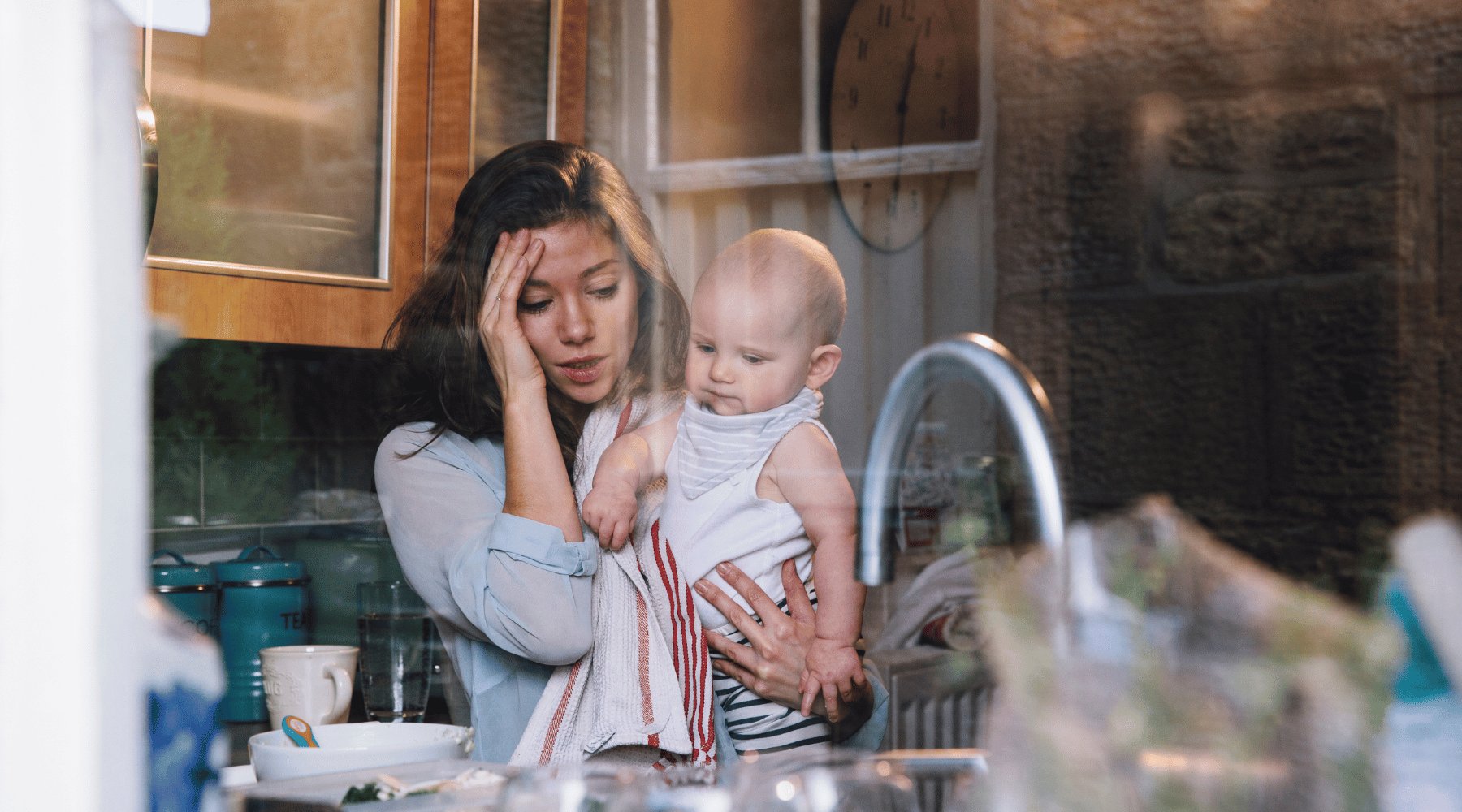
This as-told-to essay was shared by Renee P. with The Growing Home and edited for length and clarity.
I used to think love would speak for itself. I live in Oak Park, just outside Chicago and for years my days ran on lists nobody else could see. I knew which kid needed gym shoes by Friday. I knew when the class party called for nut-free snacks. I knew the pediatric dentist changed our appointment policy after COVID and I knew Eli would only take the bubblegum fluoride if the hygienist let him hold the suction straw first.
From the outside, my life looked ordinary. School drop-off, a quick Target run, work emails in a parked car, pasta on the stove, laundry folded during half an episode of something I never finished. Inside, I carried a steady hum of responsibility. It followed me through Trader Joe’s, into the carpool lane and right up to bedtime.
I remember one Tuesday in November when my daughter Nora rolled her eyes because I asked her to bring her wet towel downstairs. I had spent the whole day keeping our little universe from sliding off its axis. I mailed the field trip form, refilled her inhaler, texted her piano teacher and picked up poster board before CVS closed. Her eye roll lasted two seconds. My resentment lasted three days.
If you have ever felt foolish for wanting your effort to be seen, I get it. A lot of parents carry hidden work with a smile, then feel ashamed when appreciation does not arrive. You tell yourself to be more mature. You tell yourself children are busy, distracted, growing. All of that can be true and you can still feel bruised.
It took me a long time to realize that my family loved me deeply. They simply did not have a clear view of what I was doing. Once I saw that, I stopped waiting for mind-reading and started learning how respect actually grows inside a home.
1. I thought sacrifice would explain itself
Years ago, I believed effort created its own witness. If I woke up early, stayed up late, remembered every birthday gift and made Christmas feel warm and easy, surely my children would feel that labor in their bones. I thought sacrifice had a kind of glow around it. I thought the person carrying the load would naturally be honored for carrying it.
That belief shaped my whole style of parenting. I rarely asked for help because asking felt less noble. I straightened the house before anyone noticed the mess. I handled teacher emails before my husband Mark even knew there was a problem. You can probably hear the trap in that pattern. I was making myself essential, then privately aching when nobody paused to say, “Wow, Mom, you held this day together.”
I remember venting to my friend David over coffee at Starbucks after a Saturday soccer game in Evanston. His twins were younger than mine then and he laughed in a tired, kind way when I said, “How do they not see any of this?” He told me kids usually experience parenting as weather. The house runs, food appears, socks are clean, rides happen. They live inside the climate you create and children rarely study the forecast.
Later, I came across a piece featuring Dr. Ross Thompson, a developmental psychologist at the University of California, Davis. He said, “Often, parents are the least appreciated in a child’s world.” That sentence landed in me because it matched my private life exactly. It also gave me relief. My hurt had a pattern and that pattern had been observed by someone who studies child development for a living.
The thing is, children usually see the benefits of care before they see the giver. Their shoes fit. Their lunch gets packed. Their permission slip is signed. Your effort dissolves into the background, which is part of what makes quiet resentment so easy to grow. You keep loving, they keep receiving and the emotional math starts to sting.
2. The work my children never saw
When I say I was tired, I do not only mean physically tired. I mean the kind of tired that comes from carrying thirty tabs open in your brain. Nora’s science fair deadline. Eli’s rash cream. The gift card for the birthday party in Logan Square. The fact that we were almost out of dish soap and Mark’s mom was visiting on Sunday. This is the mental load people talk about now and I felt it years before I had words for it.
There was a time when I honestly believed the hardest part of parenting was the visible stuff. The driving, the cooking, the cleaning, the check-writing. Then one winter I got the flu and stayed in bed for two days. The house did not collapse, but the hidden systems did. Nobody knew Eli had spirit week on Thursday. Nobody remembered the library books under the back seat. Nobody thought to wash Nora’s lucky black leggings before her choir concert.
That was when I started seeing the full weight of invisible labor. It lives in anticipation. It lives in noticing. It lives in the tiny acts that prevent chaos before chaos has a chance to arrive. You know this work if you have ever replaced the milk before anyone asked, booked the dentist before a toothache, or carried an extra sweatshirt because the weather app said 58 by sunset.
Researchers Lucia Ciciolla and Dr. Suniya Luthar gave this experience language in work discussed through an invisible labor report from Arizona State University. Luthar said, “Until recently, no one stopped to think about Mom herself.” That line hit me hard because I had spent years treating my own depletion like background noise. Their work also highlighted that the hidden labor tied to children’s well-being showed strong links with mothers’ distress.
I admit I used to minimize that distress. I would joke with Sarah from accounting about being the “family COO,” then go home and feel strangely lonely while packing lunches. Humor softened it for a minute. It did not restore me. When your effort stays unseen for long stretches, your body registers that invisibility.
And children miss this work for a simple reason. Good invisible labor feels seamless. The day goes smoothly. The backpack is ready. The medicine is refilled. Your success removes evidence that there was ever a problem to solve. That is why so many parents look “fine” while carrying a deeply unequal burden.
3. Why kids miss invisible labor
I remember when Eli was six and asked, with complete sincerity, whether toothpaste just came with the house. I laughed so hard I had to sit down at the kitchen table. We were in the middle of unloading groceries from Jewel-Osco and he truly had no idea that toilet paper, applesauce cups, batteries and laundry pods came from somebody’s planning. That moment stayed with me because it was funny and because it revealed something important. Children are receivers long before they become observers.
When kids are young, they live very close to their own needs. Hunger feels immediate. Disappointment feels huge. Gratitude exists, but it begins in a simple form. A child may know they feel happy when they get help. A deeper kind of appreciation grows later, when they can picture the other person’s intention and effort.
That developmental shift is exactly what researchers found in a gratitude study by Jackie A. Nelson, Lia Beatriz de Lucca Freitas and their colleagues. In the paper, they explain, “To feel grateful, an individual must recognise that another person, the benefactor, has identified and acted to fulfill one’s own need or desire.” In plain language, gratitude takes perspective. A child has to move beyond, “I got something good,” and into, “Someone noticed me and acted for me.”
That idea changed the way I looked at my children’s blind spots. I stopped reading every missed thank-you as selfishness. Sometimes it was simply a developmental reality. They were still learning how to connect comfort with intention. They were still learning that fresh towels, stocked snacks, signed forms and birthday magic came from someone’s mind and someone’s time.
My friend Elena in Austin once said kids are like guests in a hotel run by people they love. I laughed, then winced, because it fit. They enjoy the clean room and warm breakfast. They rarely think about housekeeping. If you are a parent, that does not mean your children lack heart. It means their ability to see the person behind the comfort develops slowly and it needs help.
4. How gratitude grows through language and time
Once I understood that, I changed the way I talked at home. I did not want speeches. I wanted simple naming. At dinner, I started saying things like, “Dad left work early so he could get you to practice,” or “I remembered your poster board because I knew you were stressed about tomorrow.” I kept my tone warm. I wanted my kids to connect daily ease with human effort.
At first, I worried this would sound needy. It felt awkward for a week, maybe two. Then I noticed something small and encouraging. Nora started saying, “Thanks for thinking ahead,” when I packed an umbrella in her tote bag. Eli began noticing who had done what. He would say, “Dad filled the gas tank,” or “Mom got my library book back.” Those tiny sentences mattered to me more than the dramatic thank-yous I had fantasized about.
Research backs up this shift. In a paper on family conversations, Allegra J. Midgette, Jennifer L. Coffman and Andrea M. Hussong wrote that “both how parents talk to children and what they say to children is related to how well children remember and interpret past events.” That insight gave me a framework. Memory follows language. When we name effort, children have a better chance of remembering it and attaching meaning to it.
I started using ordinary moments as little lessons in perspective. On a rainy Tuesday, I would say, “Grandma drove across town from Naperville to watch you because she wanted to help us.” After a birthday, I would ask, “What do you think Aunt Mia hoped you would feel when she picked that gift?” These were not heavy conversations. They were brief invitations to imagine another person’s care.
Over time, I saw that gratitude takes perspective, repetition and emotional maturity. It grows through family habits. It grows when children are encouraged to notice intention, not only outcome. It grows when they hear stories about effort often enough that effort becomes visible. The payoff is bigger than politeness. You are helping a child build empathy, memory and respect.
5. What changed when I finally named the load
The biggest shift in my house came when I stopped hoping my family would magically detect the whole picture. One Sunday afternoon, after unloading Costco in a cold garage and realizing I was furious over something as silly as paper towels, I called everybody to the kitchen. Mark leaned against the counter. Nora was half-listening. Eli was trying to pet the dog with a dish towel on his head. I almost laughed and backed out. Then I stayed with it.
I told them I loved taking care of our family and I also needed the care work to be visible. I said I was carrying too much planning by myself. I listed what that planning actually included. Appointments, school emails, grocery tracking, medication refills, birthday gifts, permission slips, camp forms, rides and the emotional weather of the house. Saying it aloud felt like setting down boxes I had been carrying for years.
To my surprise, nobody argued. Mark looked stunned, then apologetic. Nora said, “I didn’t know you were thinking about all of that every day.” Eli asked if he could be in charge of checking whether we had enough toothpaste, which honestly still makes me smile. That conversation did not transform us overnight. It created a new family language and that language made respect grow in the open.
Now we use a whiteboard by the fridge. We rotate a few predictable tasks. We say who handled what. We thank one another more specifically. I still do a lot, probably more than I should sometimes, but I no longer act like love requires silence. If you want your children to value care, let them hear its shape. Name the need. Name the effort. Name the person who showed up.
I will be honest, there are still evenings when I feel invisible. Parenting has a way of humbling every system you build. Still, I feel lighter now because I understand the pattern. Children often miss sacrifice that runs quietly in the background. Gratitude deepens when they learn to see intention. Family respect strengthens when care becomes discussable. That is the lesson I wish I had learned years earlier, somewhere between the Target receipts and the lunch boxes. Family culture changes when the hidden work finally gets words.